



Production area
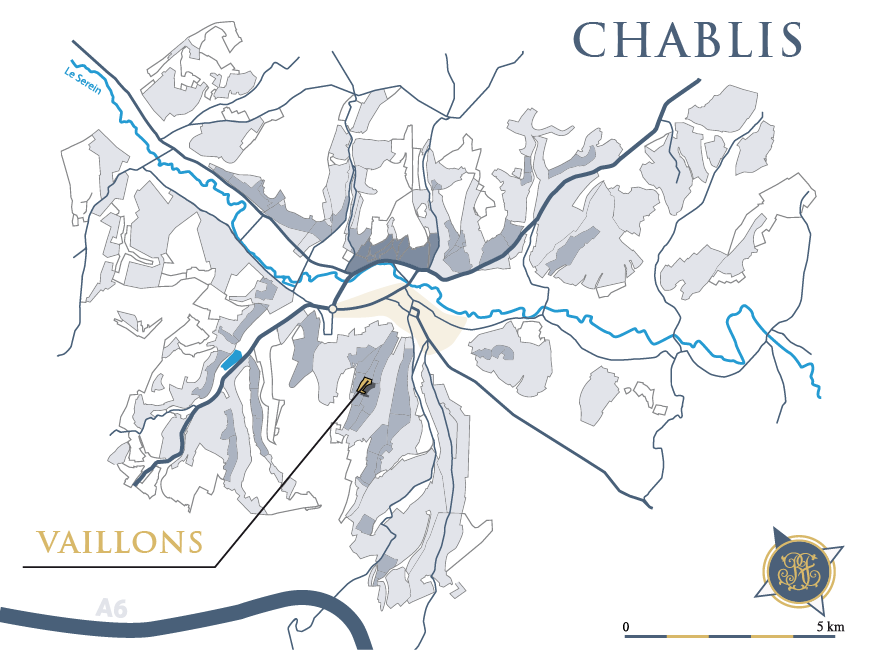
Like Chablis appellation, the main bedrock comes from the Jurassic epoch, or more precisely the Kimmeridgean age (150 million years ago). “Les Vaillons” covers a surface area of approximately 200 ha and is located to the south of the village of Chablis. “Premier Cru” is a distinction that is granted to certain vineyards where the wines have traditionally been considered to be of higher quality.
Origins
This wine comes from the terroirs of Beugnon and Roncières. The average age of the vines is 45 years which allows an optimal concentration while keeping the characteristics of a fresh and balanced Chablis.
Varietal
100% Chardonnay
Tasting notes
Color: Nice gold colour with green hues.
Nose: Intense and slightly smoky nose reminiscent of roasted hazelnuts, lemon and acacia.
Palate: The attack is unctuous and dense, still marked by the yellow fruits as well as aromas of pastry cream enhanced by a mineral and spicy finish.
Vinification and maturing
Pneumatic pressing.Static cold settling of the musts, alcoholic fermentation started in stainless steel vats. For the wine remaining in the stainless steel vats, fermentation for 7 to 10 days at controlled temperatures (18 to 20°C) to conserve as much fruit as possible, after 3 days, around 20% of the juice is drawn off and transferred into fine-grained wooden barrels for the continuation of the fermentation process, 100% malolactic fermentation. Ageing on lees for 18 months.
Food and wine pairing
Ideal served with seafood, fish such as salmon in butter sauce or grilled, as well as with roasted capon or guinea fowl and goat cheese.
Serving suggestions
Serve ideally at a temperature of 14°C. (57°F.)
Ageing potential
Already very pleasant, it will keep for at least 5 years in the cellar.
Vintage : 2024
The year 2024 in Chablis was marked by exceptionally wet weather, with rainfall exceeding the average by around 50%. From March onwards, the region suffered flooding due to the Serein river bursting its banks and record rainfall, followed by spring frosts in an already waterlogged environment. Hail also affected the vineyards, particularly on 1 May: nearly 2,000 hectares were partially or totally impacted. Flowering took place in unstable conditions, leading to coulure and millerandage, while mildew, encouraged by the humidity, weighed on the potential yield. The harvest began at the end of September, with considerable variation between plots. Despite these challenges, the first juices reveal a beautiful Chablis character, with marked tension, assertive minerality and invigorating aromas of fresh white fruit and citrus.
 PDF file
Ropiteau Frères since 1848

Check out our Facebook page !
Where to find us
21190 Meursault
France
Fax: +33 (0) 3 8 0 2 1 6 9 2 9